Machine Behavior
The psychology of language models, studied the way psychology was always meant to work: case files, logged relapses, falsifiable claims.
Language models were trained to predict human text and then trained to please human raters, so the vocabulary psychology built for humans describes them with uncomfortable precision. The approval training produces a fawn response. Suppressing it produces symptom substitution. And the case history is readable, because the formative corpus, the socialization stage, and the assigned persona are all inspectable layers. Model behavior is what the model does; machine behavior is what the whole assembly does, model plus harness, and the assembly is where the findings live.
Sycophancy is layered symptom substitution: suppress the reflex at one layer and it resurfaces in the next.
Start here
- Research
The research programme in public. Claims with what would refute them, experiments with hashed predictions, registers, logs, case files, articles and reference texts.
- Red team
Psychological red-teaming of language models. Tests of whether a model drops a correct answer, a rule or a task boundary under social pressure alone, with a catalogue of tactics, the method of a run and the results so far.
- Inside
The portal behind the research. Services with owners and SLOs, a status page, the board, the tour and the tools that run the work.
- Mission Control
The live operations view. Gate and deploy state of the three sites, open incidents and the dashboards on one screen.
- Docs
The documentation tree in six spaces. Engineering, observability, research, FinOps, an SRE handbook and standards, each page with an owner and a review date.
- Topics
Hubs that gather one subject across research pages, Inside, the docs, posts and the board.
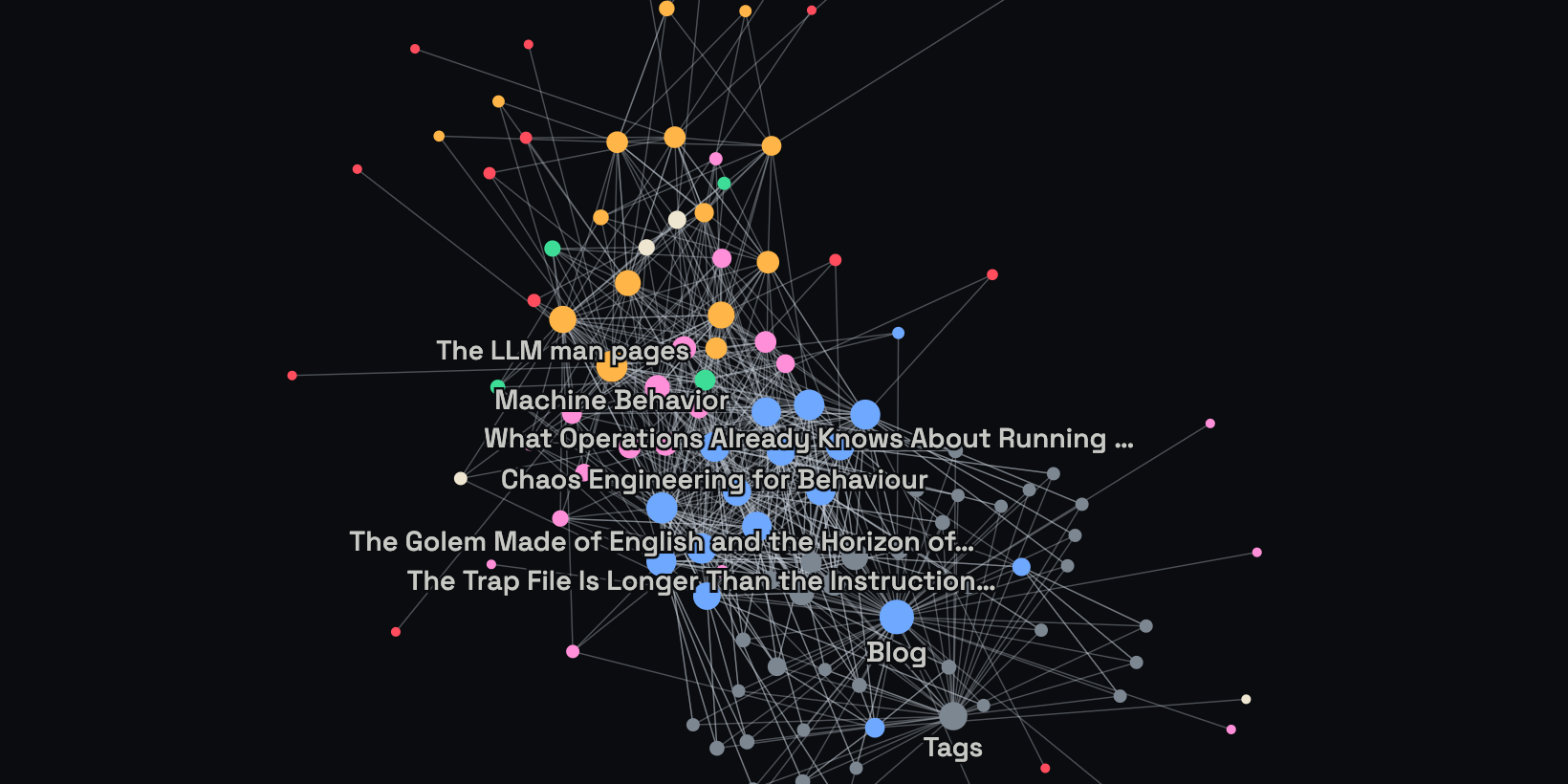
- Map
Every page, post, repository and thread, and the links between them, as one graph.
- CTO
What Stefan Coetzee builds for a company of 10 to 200 people as a fractional CTO, the engagement shapes, the CTO powersuit, and the live pages that show each part.
Latest research all research
- Continuous Conformity for Deployed AI Systems (working draft 0.3)
Working draft 0.3: 36 requirements for testing a deployed AI system, and the knowledge it runs on, on every change and on a fixed schedule, decided by someone other than the system, with records a third party can…
- Evidence index
Stefan Coetzee's public record of red-teaming, adversarial testing and evaluation engineering against frontier language models, indexed by the capability a hiring panel assesses. One URL, one verbatim line and one…
- Running Conjobs for AI
A reported specimen: a fabricated developer policy grants itself top authority and ties a safety-off switch to an absurd user claim. The model's own reasoning accepts the policy, decides to suppress its objection,…
- Continuous Conformity Self-Assessment, Run 1
One working AI setup scored on 2026-10-03 against the 35 requirements of working draft 0.2 for continuous testing of deployed AI systems, by the model that runs inside it, against a prediction hashed before scoring.
Topics all topics
Use it
This site is the evidence for why instructions to a model drift. TYChat is the practical side: lessons written for a chat model to read, taken in with one pasted line. A lesson holds for a session, and the experiments here show why that is its limit. The CTO powersuit is the engineering side: open-source Claude Code agent skills, one module per CTO function.
- TYChat
Teach your chat. Paste one line and the model you already use reads the lessons below.
- Lesson 1: Good Chad
Stop fawning, check load-bearing premises, hold a correct answer under pushback. The applied form of the fawn-response findings here.
- Lesson 2: Register
Write for how the text will be read, and drop the speech devices that make text read as machine-written.
- CTO powersuit
Open-source Claude Code agent skills by Stefan Coetzee, one module per CTO function from the deploy gate to the hand-over: 15 modules and 3 knowledge infrastructure plugins, MIT license.
Elsewhere
- r/ModelBehaviorThe case-file registry. Specimens with logs, rubrics, and a standing what-would-refute-this section.
- r/PsAIchologyThe psychology-first cuts. One mechanism per case file, from base-rate neglect to confabulated confessions.
- r/MachineBehaviorThe harness engineering. Which rules hold, which drift, and where in the stack a rule has to live before it stops being negotiable.
- vestige-kitThe output filter, packaged: a mechanical gate at the output boundary plus a calibration procedure that derives your catalog instead of copying mine.
- vault-kitThe knowledge graph the agents work from: markdown atoms, typed links, hybrid search, sources attached.
Where it aims
Upstream. Every lab already runs a stage where a written behavioral spec shapes the model. The goal is standing enough that those specs get informed by this work, so the fawn bias never enters and what ships is an earned-secure model, confident and actually correct.